

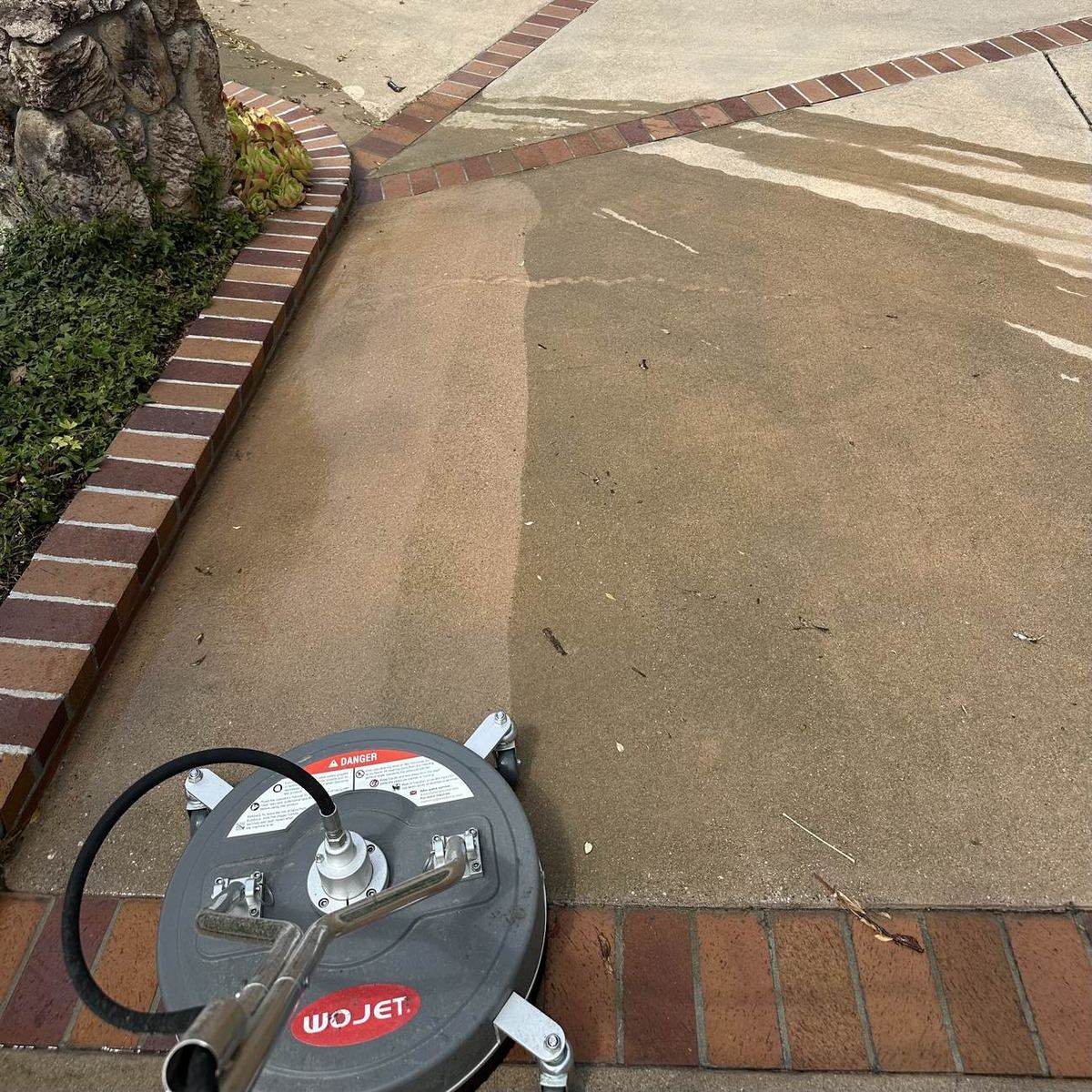
If you're asking this question, there's a decent chance you're already looking at a driveway that's seen better days. That's normal — concrete doesn't announce when it needs attention, it just slowly gets duller, darker, and streakier until one day it looks nothing like it did when it was new.
The honest answer is: most South Bay homes do well with a pressure washing once or twice a year. But "most homes" isn't your home, so here's what actually moves that number up or down.
What speeds up the buildup
- Homes shaded by large trees, where algae and moss have moisture to grow in
- Driveways near sprinklers or irrigation lines, where hard water and overspray create mineral staining
- Homes with heavy foot or car traffic, where tire marks and tracked-in dirt accumulate faster
- Coastal properties, where salt air adds its own grime on top of everything else
If two or more of these apply to your property, twice a year is usually the better call. If your driveway sits in full sun with minimal traffic, once a year is often plenty.
Signs it's already overdue
You don't have to guess. A few reliable signs your driveway needs attention now, not "eventually":
- Dark patches that don't disappear after rain — that's usually algae, not just dirt
- A green or black tint in shaded corners or along edges
- Visible oil stains that have started to darken or spread
- A noticeably different color between areas that get foot traffic and areas that don't
The good news is that none of this is permanent. Concrete holds up well to pressure washing when it's done with the right equipment and technique — the buildup comes off, not the surface underneath.
Why waiting too long makes it harder
Algae and mildew get more stubborn the longer they're left alone, and oil stains set deeper into porous concrete over time. A driveway that's cleaned on a regular schedule takes less time — and less aggressive treatment — than one that's gone two or three years without attention.
A note on where the water goes
Responsible pressure washing isn't just about the surface — it's also about what happens to the water afterward. Wastewater that runs off a driveway can carry oil, dirt, and cleaning residue into storm drains, which is regulated under the EPA's NPDES stormwater program. We manage runoff on every job so it doesn't end up somewhere it shouldn't.
If you're not sure where your driveway falls, that's exactly what a quick look from us is for. We'll tell you straight whether it's due now or can wait.
Need help with this at your property?
Ready for a more beautiful, clean exterior?
Get in touch today and get started. Quality that is guaranteed.